
Fez (tarbush)
BackDescription:
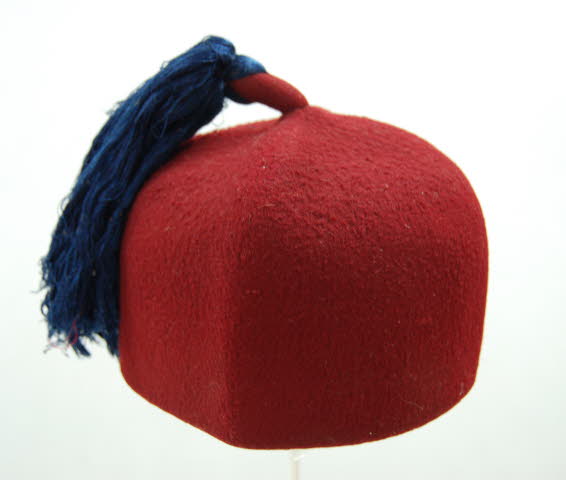
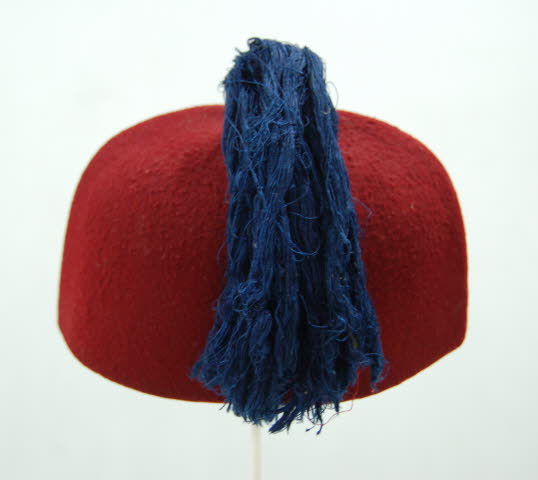
Village man's fez (tarbush), maroon felt with blue silk tassel.
Object type: | fez (tarbush) |
Museum number: | As1966,01.236 |
Date: | Late 19th century to early 20th century (circa) |
Production place: | Made in: Palestine (Historic) |
Findspot: | Found/Acquired: Palestine |
Materials: | wool, silk |
Technique: | felted |
Dimensions: | Height: 15.00 cm (excluding tassel) Diameter: 19.00 cm |
Location: | 51 |
Exhibition history: | Exhibited: 1989-1991, London, Museum of Mankind, 'Palestinian Costume' |
Acquisition names: | Purchased from: Church Missionary Society |
Acquisition date: | 1966 |
Curator's comments:
During the 1800s, Ottoman sultans attempted to modernize and introduce reforms based on European models. In addition to military, educational and economic reforms, edicts regulating the dress of the empire’s inhabitants were advocated. Sultan Mahmut II (r. 1808–1839) introduced western style military outfits for functionaries of the state and abolished the use of the turban, replacing it with the fez, a tasselled cap made of felted wool. The fez became the visible symbol of the modernisation of the empire.; From Register: "Worn with or without a turban wrapped round it. If the tassel is in, the man is married, if it is out he is unmarried."; From acquisition notes "Fellahin".
1 of 2