
Wall-painting
BackDescription:
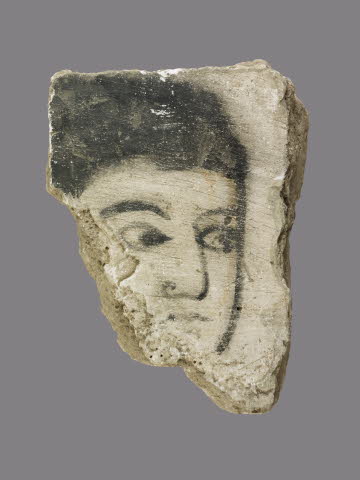
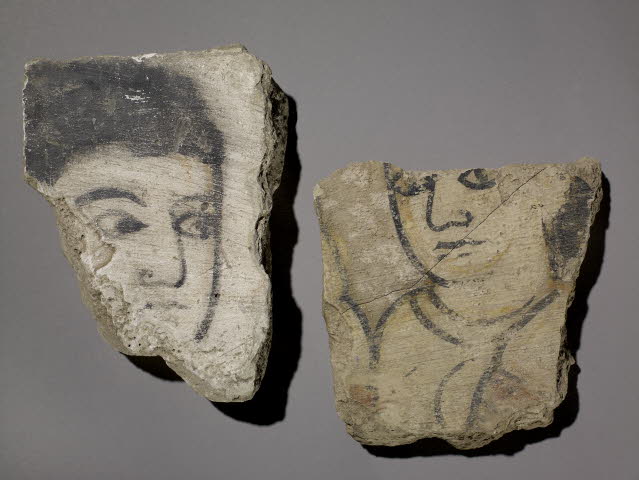
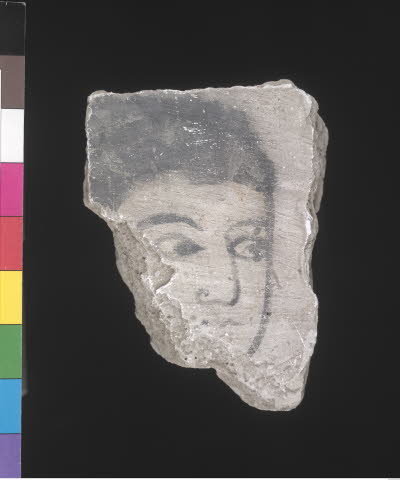
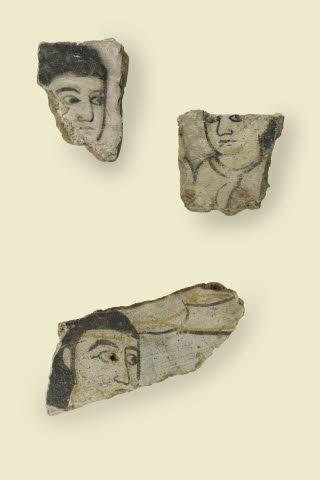
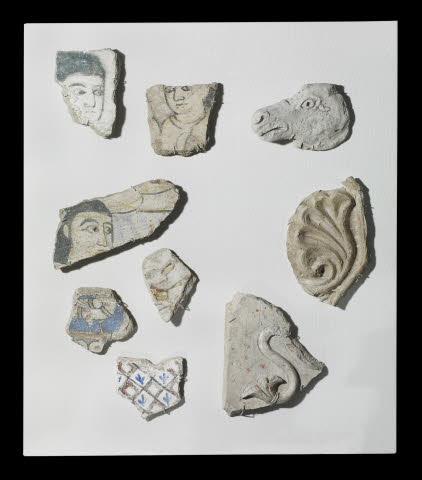
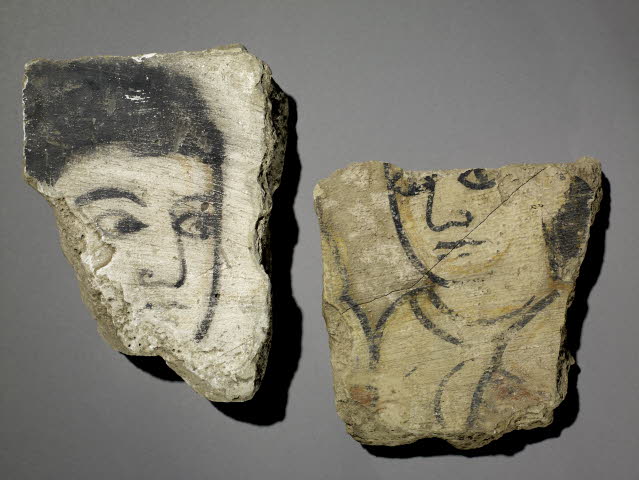
Fragmentary wall-painting; reverse with herringbone design; upper surface with part of figure, face looking left; painted with black pigments on plaster.
Object type: | wall-painting |
Museum number: | OA+.10621 |
Culture/period: | Abbasid dynasty |
Date: | 9thC |
Production place: | Made in: Iraq |
Findspot: | Excavated/Findspot: Samarra, Either the Dar al-Khilafa or private houses |
Materials: | plaster |
Technique: | painted |
Dimensions: | Length: 11.00 cm Width: 10.00 cm Height: 1.50 cm |
Location: | 22 |
Exhibition history: | Exhibited: 2010-2011, London, BM/BBC, 'A History of the World in 100 Objects' |
Acquisition date: | 1921 |
Curator's comments:
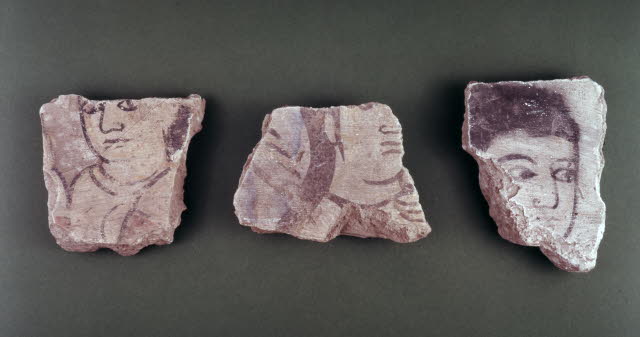
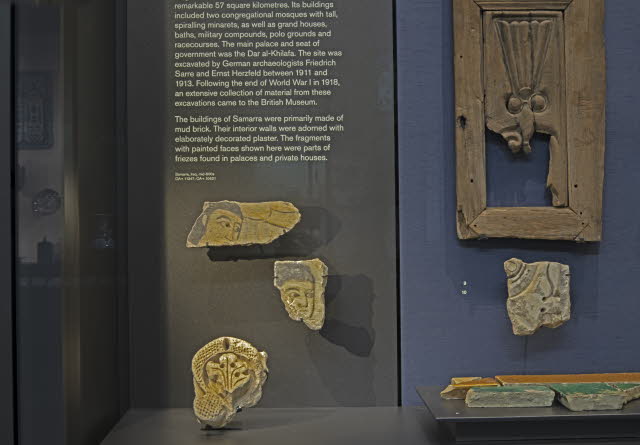
Plaster fragments with painted faces were parts of friezes found in palaces and private houses in the city of Samarra, the residence of the Abbasid caliphs from 836 to 892. The grand vision of the caliph al-Mu‘tasim (r. 796–842), the city, situated some 125 km north of Baghdad on the Tigris River, spanned a remarkable 57 square kilometres. Its buildings included two congregational mosques with tall, spiralling minarets, as well as grand houses, baths, military compounds, polo grounds and racecourses. The main palace and seat of government was the Dar al-Khilafa. The site was excavated by German archaeologists Friedrich Sarre and Ernst Herzfeld between 1911 and 1913. Following the end of World War I in 1918, an extensive collection of material from these excavations came to the British Museum. The buildings of Samarra were primarily made of mud brick. Their interior walls were adorned with elaborately decorated carbed and painted plaster.
1 of 8